Achieving seamless dialogue in film often requires replacing production audio with newly recorded lines, a process known as Automated Dialogue Replacement (ADR). The true mark of mastery in post-production sound is when this replacement goes entirely unnoticed by the audience. Th...
Automated Dialogue Replacement (ADR) is a fundamental yet often misunderstood component of modern filmmaking. It is the process of re-recording dialogue in a studio after principal photography, typically to improve audio quality, clarify lines, or add new dialogue. Unlike voiceov...
The pursuit of clean production sound is a constant battle against the inherent noise of the world. From the hum of essential machinery to the unpredictable sounds of traffic and the often-overlooked clamor of the crew, every set presents a unique acoustic challenge. For filmmake...
Capturing clean dialogue is a cornerstone of effective filmmaking, yet some of the most emotionally charged moments often involve voices that challenge standard recording practices. Whispers convey intimacy and secrets, shouts punctuate conflict and climax, and overlapping dialog...
Capturing clean, intelligible dialogue is paramount in narrative filmmaking, and while the boom microphone remains the primary tool, there are countless scenarios where its reach is limited. This is where the strategic deployment of plant microphones becomes essential. Plant mics...
The journey of a film’s audio from production sound to final master is complex, requiring meticulous attention to detail at every stage. However, the ultimate gatekeeper for sound quality and technical compliance is the Quality Control (QC) process. This focused guide delves into...
Effective sound design elevates a film from a sequence of images to a visceral experience. Within the intricate world of audio post-production, Foley plays a crucial role in grounding characters and actions in a believable sonic reality. It replaces or enhances sounds captured on...
The foundation of successful ADR begins long before cameras roll, embedded within the script development process itself. Industry standard practice, as championed by the Motion Picture Editors Guild (MPEG), dictates that potential ADR needs should be flagged during script breakdo...
The subtle art of sound post-production often hinges on meticulous preparation, and nowhere is this more evident than in the handling of production audio turnovers. The seemingly small detail of "handles", extra audio recorded before and after a visual cut, can be the difference...
Dialogue is the bedrock of narrative filmmaking, often carrying the emotional and informational weight of a scene. While wireless lavaliers offer convenience and close-miking capabilities, the boom microphone remains the primary tool for capturing natural, room-aware dialogue on...
The production sound department operates as a specialized unit, each member bearing distinct responsibilities that collectively ensure high-quality audio capture. On union features, particularly those adhering to IATSE Local 695 standards, these roles are clearly defined, minimiz...
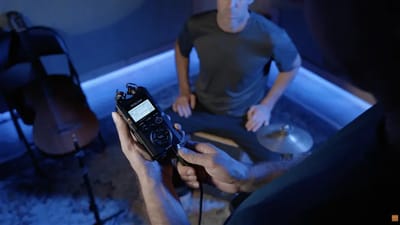
We’ve all been there: monitoring levels religiously, riding gains, praying a sudden peak doesn’t clip our takes. But 32-bit float recording fundamentally changes that equation. TASCAM's new DR-40XP, a 4-channel portable field recorder, arrives specifically to address this technical frontier, brin...
Dialogue is the backbone of storytelling in film, often carrying the narrative, character development, and emotional weight of a scene. While picture editors sculpt the visual rhythm, it's the dialogue editor who meticulously crafts the sonic performance, ensuring every word is c...
Effective sound post-production hinges on precise synchronization. Discrepancies between picture and sound, even by a single frame, can derail an entire project, leading to costly revisions and missed deadlines. For serious filmmakers, understanding and implementing robust refere...
Understanding the landscape of loudness standards is the first step toward effective audio finishing. The days of simply mixing to peak levels are long gone; modern distribution demands adherence to integrated loudness metrics. The primary standard governing this is ITU-R BS.1770...
One of the most common pitfalls in production sound is the premature judgment and deletion of "unusable" takes or alternate recordings. The mantra in professional sound post-production is clear: *never delete alts*. Every single take, regardless of perceived quality on set, holds...
Effective communication is the bedrock of any successful film production, and nowhere is this more critical than in the handoff from production sound to post-production audio. Sound reports are not merely administrative documents; they are the Rosetta Stone that allows post-produ...
Capturing clean, intelligible dialogue is paramount in filmmaking, and the choice and placement of lavalier microphones play a critical role. Wardrobe, often designed for visual impact, presents constant challenges for production sound mixers. Understanding how different fabrics,...
Effective production sound begins long before the camera rolls, often even before the director has fully visualized their shots. The sound department's proactive involvement in location scouting is not merely a courtesy; it is a critical safeguard against costly post-production f...
For filmmakers aiming for distribution, the creative process does not end with picture lock and a final mix. A critical, often misunderstood, and frequently under-budgeted component of post-production is the creation of M&E (Music & Effects) deliverables. These specialized audio...
The final quality control (QC) of a film's audio is not a mere formality; it is the ultimate guardian of the audience's immersive experience. A meticulously crafted soundscape can be undermined by a single sync error, a jarring peak, or an unresolved phase issue. This guide delve...
Reliable production sound hinges on invisible infrastructure: the radio frequency (RF) spectrum. In an increasingly crowded wireless landscape, robust frequency planning is no longer a luxury but a necessity to capture clean dialogue and essential sound effects. This process invo...
Effective production sound is not just about capturing clean audio; it's equally about meticulously documenting that audio so it remains usable through post-production. The difference between a smooth editorial process and a chaotic one often hinges on the quality and consistency...
The journey from a locked picture edit to a sonically polished film involves a critical handoff: transferring the editor’s timeline to the sound post-production team. This exchange is not simply about sharing video files; it requires a precise, metadata-rich translation of audio...
Achieving perfect synchronization between production sound and picture is not merely a technical detail; it is foundational to the immersive experience of cinematic storytelling. When sound drifts from picture, even by a few frames, it shatters the audience's suspension of disbel...
The transition from picture lock to sound post-production is a critical juncture in filmmaking, often fraught with technical complexities that can derail schedules and inflate budgets. For the picture editor, a meticulous sound turnover is not merely a formality; it is a foundati...
Another trip around the sun, another slate of cinematic and episodic work recognized not for the glittering pixels or the compelling performances, but for the intricate, often invisible alchemy of sound. The Cinema Audio Society has, once again, stepped forward to pull back the curtain on the cra...
If another company dropped a compact, battery-powered audio recorder with four Midas preamps, 32-bit float recording, timecode, and CEC camera control for under a grand, the industry would be in an absolute frenzy. But it's Behringer. And that carries a particular weight, doesn't it? The FLOW 4V ...
Capturing pristine production sound is not merely an auxiliary task; it is the bedrock of compelling cinematic storytelling. In an era where visual fidelity reaches unprecedented heights, audiences expect audio to match that standard. This definitive guide delves into every facet...
Music is the soul of cinema, yet navigating its legal and financial landscape can feel like a labyrinth for independent filmmakers. This definitive guide demystifies music licensing, providing a comprehensive roadmap from understanding foundational rights to mastering negotiation...
Sound design is far more than just adding noises to a film; it is the deliberate art of crafting a film's entire aural landscape to enhance storytelling, evoke emotion, and immerse the audience. Often considered 50% of the cinematic experience, effective sound design works in con...
So, January 2026 just dropped a small arsenal of new sound libraries, and for folks who spend their days wrestling with track counts and foley pits, this particular monthly haul looks pretty compelling. Forget the usual trickle; we're talking about thirty-seven distinct collections hitting the ma...
Education, Sound Design, Audio, Post-Production, Production
At the heart of a film's soundtrack lies dialogue, the primary carrier of narrative information and emotional subtext. Every other element of the soundscape, from the subtlest ambience to the most explosive sound effect, is built around its clarity. In professional filmmaking, th...
SmallRig has officially entered the 2.4 GHz wireless audio market with the introduction of its S 70 2-Person Wireless Microphone System, announced on January 6, 2026, at CES 2026. This compact audio solution is designed to provide creators with a portable and high-quality option for capturing dia...
If you've ever found yourself in final mix - probably past midnight, the client breathing down your neck, and the dialogue still sounds like it was recorded in a tin can - you know the pain. And sometimes, that pain stems from a fundamental misunderstanding, or worse, a blurring of lines betw...