The color science within a camera system forms the fundamental bedrock of its image capture and, by extension, the entire post-production pipeline. For professional cinematographers and colorists, changes to this core engine are never trivial. Blackmagic Design recently announced Blackmagic Camer...
Understanding the distinction between backup and archive is fundamental. A backup is a temporary copy of data for immediate recovery from accidental deletion or hardware failure. An archive, however, is a permanent, unique instance of finalized files moved off primary production...
Professional subtitle and caption workflow: reading speed and timing rules in characters per second, format choice from SRT to IMSC and SCC, plus version control that survives a twelve-language delivery.
Achieving seamless dialogue in film often requires replacing production audio with newly recorded lines, a process known as Automated Dialogue Replacement (ADR). The true mark of mastery in post-production sound is when this replacement goes entirely unnoticed by the audience. Th...
The visual effects driving the storytelling in "The East Palace" are being showcased in a newly released featurette. The piece, distributed by Netflix K-Content, offers a look into the film's VFX implementation.
Automated Dialogue Replacement (ADR) is a fundamental yet often misunderstood component of modern filmmaking. It is the process of re-recording dialogue in a studio after principal photography, typically to improve audio quality, clarify lines, or add new dialogue. Unlike voiceov...
The concept of "picture lock" is often treated as a sacred milestone in filmmaking, signaling the moment when the picture editor has finalized the visual cut and the post-production sound team can begin their work in earnest. In reality, especially in independent and fast-paced p...
The complexity of managing dual HDR and SDR deliverables has long been a chokepoint in post-production. Colorists and post-production supervisors know the painstaking process of trimming a high-brightness container after an SDR master has been approved, often leading to additional, granular appro...
Effective filmmaking demands a constant interplay between creative vision and technical execution. For projects involving visual effects, this dynamic is particularly acute in the edit suite. Editors cannot wait for final VFX shots, which can take weeks or months to complete, yet...
The visual effects in high-stakes action narratives often grapple with a core dichotomy: spectacle versus realism. How much should an audience perceive the digital intervention, especially when depicting scenarios meant to feel dangerous and uncontrolled? Kevin Lingenfelser, VFX Supervisor on Net...
Final picture quality control (QC) is the last line of defense before a film or series reaches its audience. It is a critical, often underestimated phase of the post-production pipeline, ensuring the visual integrity of the graded master and all its derived deliverables. This gui...
The global reach of film and television demands a post-production pipeline capable of delivering content to diverse audiences in their native languages. This isn't an afterthought; a successful localization strategy must be woven into the fabric of your post-production workflow f...
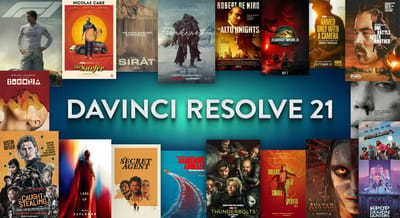
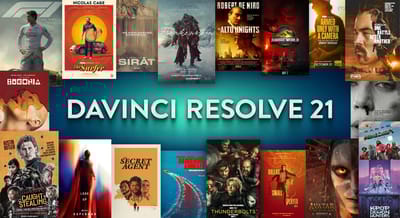
Blackmagic Design has officially released DaVinci Resolve 21, marking a significant evolution of the platform. This update introduces a new Photo page, expands the integrated AI toolset, incorporates Krokodove functionality into Fusion, and significantly broadens RAW format compatibility. The com...
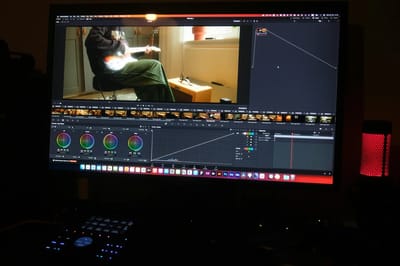
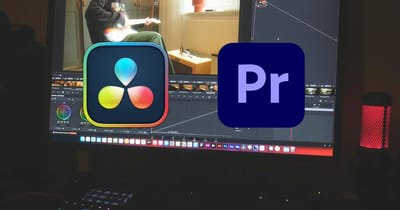
The choice of post-production software often boils down to a filmmaker's established pipeline and the specific demands of a project. For many, the decision between DaVinci Resolve and Adobe Premiere Pro for color grading isn't just about features; it's about workflow integration, real-time perfor...
The journey of a film’s audio from production sound to final master is complex, requiring meticulous attention to detail at every stage. However, the ultimate gatekeeper for sound quality and technical compliance is the Quality Control (QC) process. This focused guide delves into...
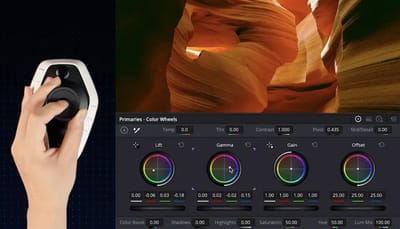
The introduction of new hardware to the post-production ecosystem always warrants attention from professional editors and colorists. XPPen, a company primarily recognized for its stylus displays and graphics tablets, has now entered the hardware controller market with the announcement of the Pilo...
The foundation of a reliable audio turnover lies in consistent and explicit track labeling. Professional broadcast and film post facilities universally mandate a clear distinction between dialogue (DX), music (MX), and effects (FX) tracks. This is not arbitrary; it's a practice b...
The subtle art of sound post-production often hinges on meticulous preparation, and nowhere is this more evident than in the handling of production audio turnovers. The seemingly small detail of "handles", extra audio recorded before and after a visual cut, can be the difference...
The relationship between a director and their editor is one of the most critical and delicate collaborations in filmmaking. It’s where the raw material of production is sculpted into the final narrative. For directors, the challenge lies in effectively communicating their vision...
Blackmagic Design's announcement of DaVinci Resolve 21, made days ahead of NAB 2026, signals a significant evolution for the platform. This iteration introduces a dedicated Photo page, integrating still image handling and grading, alongside eight new AI-powered tools and enhanced tethered camera ...
Efficient editorial organization is the bedrock of any successful post-production pipeline, transforming raw footage into a coherent narrative. For serious filmmakers, mastering this initial phase is not merely about tidiness; it is about establishing a systematic framework that...
Dialogue is the backbone of storytelling in film, often carrying the narrative, character development, and emotional weight of a scene. While picture editors sculpt the visual rhythm, it's the dialogue editor who meticulously crafts the sonic performance, ensuring every word is c...
Effective sound post-production hinges on precise synchronization. Discrepancies between picture and sound, even by a single frame, can derail an entire project, leading to costly revisions and missed deadlines. For serious filmmakers, understanding and implementing robust refere...
Understanding the landscape of loudness standards is the first step toward effective audio finishing. The days of simply mixing to peak levels are long gone; modern distribution demands adherence to integrated loudness metrics. The primary standard governing this is ITU-R BS.1770...
One of the most common pitfalls in production sound is the premature judgment and deletion of "unusable" takes or alternate recordings. The mantra in professional sound post-production is clear: *never delete alts*. Every single take, regardless of perceived quality on set, holds...
Effective communication is the bedrock of any successful film production, and nowhere is this more critical than in the handoff from production sound to post-production audio. Sound reports are not merely administrative documents; they are the Rosetta Stone that allows post-produ...
The digital nature of modern cinematography means that every frame exists as data, susceptible to corruption during transfer, storage, or processing. A single bit flip can render a file unreadable or introduce irreversible artifacts. This is where checksums become indispensable....
Guides, Post-Production, Cinematography, Color Grading
A well-constructed Look-Up Table (LUT) pipeline is more than a technical necessity; it's a critical component of visual storytelling, ensuring creative intent translates consistently from pre-production through to final delivery. For cinematographers and directors, it’s the bedro...
The final quality control (QC) of a film's audio is not a mere formality; it is the ultimate guardian of the audience's immersive experience. A meticulously crafted soundscape can be undermined by a single sync error, a jarring peak, or an unresolved phase issue. This guide delve...
Another Apple announcement, another spec sheet to parse. But this time, it's not just about bumping clock speeds. Apple just dropped their next wave of pro-level hardware: the 14- and 16-inch MacBook Pros sporting the M5 Pro and M5 Max chips, alongside a refreshed Studio Display and an all-new Studio Display XDR. These...
Effective production sound is not just about capturing clean audio; it's equally about meticulously documenting that audio so it remains usable through post-production. The difference between a smooth editorial process and a chaotic one often hinges on the quality and consistency...
Modern filmmaking routinely captures footage at resolutions like 4K, 6K, and 8K, demanding significant computational power for editing. Without a well-designed proxy workflow, even a robust edit suite can struggle, leading to dropped frames, stuttering playback, and a fractured c...
Guides, Post-Production, Production, Color Grading, Cinematography
A film's visual integrity hinges on a meticulously planned and executed color pipeline. It's the invisible backbone that ensures creative intent translates faithfully from the director's monitor on set to the final cinematic release. Without a robust strategy, color accuracy can...
The ongoing push for efficient codecs in acquisition and delivery means post-production professionals are constantly navigating the complexities of highly compressed video formats. While these codecs offer significant advantages in file size and bitrate, they often introduce a frustrating hurdle ...
The journey from a locked picture edit to a sonically polished film involves a critical handoff: transferring the editor’s timeline to the sound post-production team. This exchange is not simply about sharing video files; it requires a precise, metadata-rich translation of audio...
The seamless integration of visual effects into a film relies heavily on precise communication and meticulous preparation from the editorial department. A critical, yet often underestimated, step in this process is the creation of a VFX pull list and the subsequent pulling of med...
The shift from manual camera reports to embedded, machine-readable metadata is one of the most significant advancements in modern cinematography workflows. For serious filmmakers, this evolution is not merely a convenience; it is a critical safeguard against costly reconform issu...
The transition from offline editorial to online finishing is a critical juncture in the post-production pipeline, often fraught with potential for error. A seamless conform is not merely a technical step; it's the preservation of editorial intent and the foundation for high-fidel...
Achieving perfect synchronization between production sound and picture is not merely a technical detail; it is foundational to the immersive experience of cinematic storytelling. When sound drifts from picture, even by a few frames, it shatters the audience's suspension of disbel...
The journey of a film from concept to screen is a complex tapestry woven by many hands. While the magic often feels like it happens on set, the meticulous craft of post-production is where the vision truly solidifies. A critical, yet often overlooked, element in this phase is the...
The transition from picture lock to sound post-production is a critical juncture in filmmaking, often fraught with technical complexities that can derail schedules and inflate budgets. For the picture editor, a meticulous sound turnover is not merely a formality; it is a foundati...
Blackmagic Design has released the DaVinci Resolve 20.3.2 Update, introducing several refinements aimed at post-production workflows. This iteration focuses on practical improvements in core editing functions, including a new trim editor option for dynamic trimming and enhanced kerning for subtit...
The journey of a film doesn't end when "picture lock" is achieved. For serious filmmakers, the critical phases of mastering, localization, and archiving represent the final, yet often overlooked, chapters of production. This comprehensive guide dissects these essential processes,...
The Monza sequence in *F1*, where the character Joshua crashes after being advised to remain on slick tires in wet conditions, presented a complex array of challenges for the visual effects team at Framestore. Principal among these were the logistical hurdles imposed by actor strikes and track av...
The second and final trailer for "I Can Only Imagine 2," the sequel to the 2018 faith-based music drama, has been released ahead of its theatrical debut this month. Lionsgate’s distribution of this follow-up, again centered on musician Bart Millard and his band MercyMe, prompts an examination of ...
The notion that color is merely an aesthetic choice, rather than a quantifiable, reproducible science, is a relic. For too long, the industry has contended with systems that treat display pipelines as afterthoughts, often resulting in agonizing battles to maintain creative intent across varied vi...
The phrase "visual effects" often conjures images of nine-figure tentpoles, vast render farms, and teams of hundreds. But the reality for most productions exists far from that stratosphere. For independent filmmakers and projects operating on constrained budgets, VFX isn't about replicating *Avat...
The perpetual struggle in visual effects involves optimizing time without compromising quality. For years, isolating elements for compositing has been a labor-intensive task, often involving intricate rotoscoping or the meticulous stagecraft required for greenscreen. Adobe Photoshop's AI Backgrou...
Converting a fixed image into a dynamic shot has long been a complex, resource-intensive task, demanding considerable skill in VFX compositing, 2.5D projection, or even full 3D environment builds. Now, Runway's Gen-4.5 Image-to-Video tool claims to reframe this process, offering a new pathway for...
How many times have we sat in a wrap meeting, everyone patting themselves on the back, only to hear the post-production supervisor lamenting “If only I’d known that on set”? It’s a refrain as old as filmmaking itself, a testament to the persistent chasm between shooting and finishing that has pla...