2026 Cinema Camera Guide: Investment Roadmap
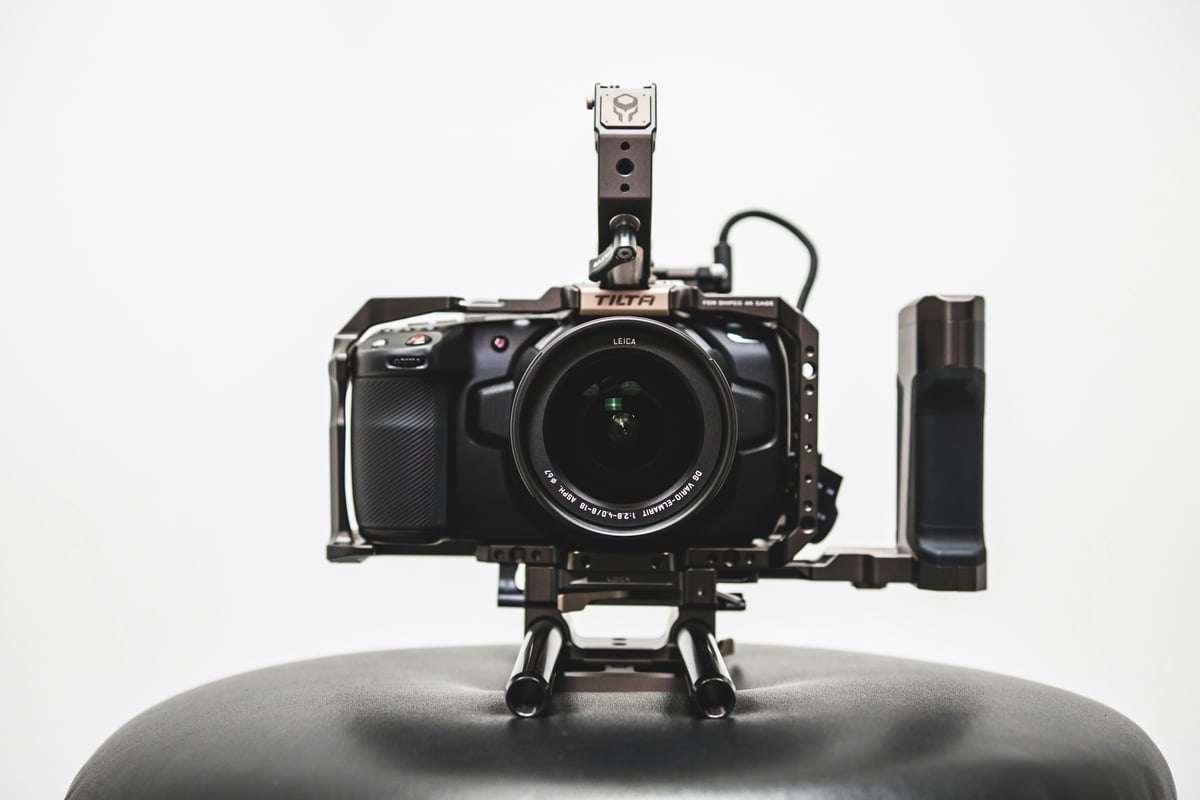
Executive Summary
Choosing your first cinema camera in 2026 is a pivotal decision that impacts your creative potential, workflow efficiency, and long-term investment. This definitive guide cuts through the noise of rapidly evolving technology, offering a comprehensive roadmap for aspiring filmmakers, content creators, and indie producers. We'll demystify the distinctions between dedicated cinema cameras and advanced mirrorless hybrids, delve into critical considerations like sensor size, autofocus prowess, and codec options, and provide actionable advice on budgeting, lens selection, and essential accessories. From navigating the latest 2025-2026 camera releases like the Canon C50 and Blackmagic Pyxis 6K to understanding post-production workflows and future-proofing your investment, this guide provides the granular detail and expert insights you need. By the end, you'll be equipped to make an informed decision, selecting a camera system that not only meets your current needs but also scales with your artistic and professional growth.
Table of Contents
---
Understanding Cinema Cameras vs. Mirrorless Hybrids in 2026
In 2026, the line between dedicated cinema cameras and high-end mirrorless hybrids has blurred significantly, yet crucial distinctions remain, especially for first-time buyers. Understanding these differences is paramount to making an informed investment.
Dedicated Cinema Cameras, such as the newly released Canon C50 or the modular Blackmagic Pyxis 6K, are purpose-built for video production. Their core design prioritizes features critical for professional filmmaking:
Mirrorless Hybrids, on the other hand, like the Sony FX30, Sony a6700, Canon R8, or Fuji X-M5, are primarily still cameras that have evolved to include extremely powerful video capabilities. They offer cinema-like features in compact, lightweight bodies, making them incredibly appealing for run-and-gun shooting, documentaries, and budget-conscious productions.
2026 Best Practices: For first-time buyers, especially those with budgets under $3,000, starting with a high-end mirrorless hybrid is often the most pragmatic choice. They offer immense versatility, exceptional image quality, and a more forgiving learning curve. Unless your immediate project demands true cinema ergonomics, extensive rigging, or uncompressed RAW workflows from day one, a hybrid provides more bang for your buck. However, be mindful of their limitations, particularly regarding overheating during extended 4K or 8K recording sessions; always check specific record limits.
Before making a purchase, it's crucial to test different sensor sizes. APS-C sensors (like in the Fuji X-M5 or Nikon Z30) offer greater portability and often more affordable lenses, making them excellent for a lightweight setup. Full-frame sensors (like in the Canon R8 or Sony a6700 alternatives) deliver shallower depth of field, superior low-light performance, and often wider dynamic range, but come with larger, heavier, and more expensive lenses. Renting cameras for a weekend shoot is an invaluable step.
Latest Tools/Techniques: The integration of advanced software in the shooting process is a 2026 highlight. DaVinci Resolve 19, with its 2025 update, now supports on-camera LUT previewing, allowing filmmakers to visualize their final grade directly through the camera's monitor or an external display. The Canon C50, launched in September 2025, features open-gate 7K recording, offering unparalleled flexibility for reframing and cropping in post-production, a growing trend for multi-platform distribution.
Costs: Entry-level mirrorless hybrids typically range from $600 to $1,500 body-only, while true cinema cameras like the Blackmagic Pyxis 6K start around $3,000. This price difference often dictates the initial choice.
2025-2026 Developments: The industry has seen a significant push towards AI-assisted autofocus, exemplified by the Sony a6700's low-light tracking capabilities. Internal 8K RAW recording, once exclusive to high-end cinema cams, is now accessible in advanced hybrids like the Canon R5 II. Full-frame cameras have become remarkably accessible, with the Canon R8 offering a compelling package at $1,199.
Common Mistakes: A common pitfall is confusing hybrids for dedicated cinema cameras. While hybrids are powerful, they often have thermal limitations that can lead to overheating and premature shutdowns during long takes, especially in high-resolution modes. Always research a camera's specific recording limits and cooling solutions. For instance, the Canon R8 lacks in-body image stabilization (IBIS), relying solely on lens stabilization, which can be a drawback for certain handheld scenarios.
💡 Pro Tip: Prioritize cameras that offer robust log profiles (e.g., F-Log2 on the Fuji X-M5, C-Log3 on the Canon R8) over sheer resolution numbers. A well-exposed 10-bit 4:2:2 log file will always grade better and look more cinematic than a compressed 8-bit 4K file, regardless of resolution.
Recommendations: For those prioritizing portability and exceptional image quality under $1,000, the Sony ZV-E10 II ($700s) offers a professional sensor in a vlog-friendly body, while the Fuji X-M5 ($799-$899) provides impressive 6.2K open-gate 10-bit recording. If full-frame is a must-have on a budget, the Canon R8 ($1,199) is an outstanding value.
---
Budget Breakdown: Matching Camera to Your Wallet
One of the most critical steps in choosing your first cinema camera is establishing a realistic budget. Filmmaking is an ecosystem, and allocating funds wisely across different components is far more important than splurging on just the camera body. As a general rule for first-time buyers, I advise a 40/40/20 split: 40% for the camera body, 40% for lenses, and 20% for essential accessories. This ensures you have a balanced system capable of producing professional results.
2026 Best Practices: When setting your budget, think in tiers. This helps define expectations and prioritize features.
Always consider the resale value of your equipment. Brands like Sony tend to hold their value well, with some models retaining around 70% of their initial value after a year, which is a key factor if you plan to upgrade in the future.
Latest Tools: Financing options have become more accessible for filmmakers. Platforms like B&H Payboo are offering zero-interest financing for students in 2026, making higher-tier equipment more attainable. Additionally, many manufacturers and retailers offer bundled kits, such as the Nikon Z30 with a kit lens for around $600, providing an immediate, ready-to-shoot solution.
Costs Breakdown (Approximate, body-only unless specified):
- Budget Tier: Sony ZV-E10 II, Fuji X-M5, Nikon Z30. Total Starter Rig Cost: $800-$1,200
2025-2026 Developments: We've seen significant price drops on 2024 camera models, making advanced features more accessible. For example, the Canon R8, a full-frame camera, is now available for $1,199, making it a standout value proposition. Amazon's best-sellers list in January 2026 shows a strong dominance of cameras like the Canon R6 II and R8, indicating a market preference for value-packed full-frame options.
Common Mistakes: The most common mistake first-time buyers make is overspending on the camera body while skimping on lenses. A cheap kit lens will severely limit the image quality, even on an expensive camera. Invest in good glass early. For instance, a prime lens like the Sigma 16mm f/1.4 (around $400) can elevate your image quality significantly compared to many bundled kit zooms. Another error is neglecting accessories like extra batteries, memory cards, and a decent tripod, which are crucial for any serious shoot.
💡 Pro Tip: Consider buying used or refurbished equipment from reputable dealers like MPB. They often offer warranties (e.g., 80% of original warranty) and rigorous testing, allowing you to get higher-end gear for a fraction of the cost. Timing your purchase after major industry events like CES (January 2026) can also yield significant savings, as manufacturers often drop prices on older models to make way for new releases, sometimes by as much as 15%.
Recommendations: For the best value, particularly if you desire full-frame capabilities without breaking the bank, the Canon R8 ($1,199) is highly recommended. It offers 4K60 no-crop recording and C-Log3 10-bit, making it a powerhouse for its price point.
Legal/Safety: When purchasing, always buy from authorized dealers to ensure full warranty coverage. Gray-market imports, while sometimes cheaper, often void manufacturer warranties, leaving you vulnerable if issues arise. Also, consider the camera's IP rating for weather-sealing. An IP53 rating is becoming a standard expectation for run-and-gun cameras, offering protection against dust and light rain.
Emerging Trends: The industry is exploring new purchasing models. Canon Flex, for instance, is testing a rent-to-own subscription model for hybrids in 2026, providing an alternative to outright purchase. Some online retailers like Adorama are even accepting crypto payments for indie filmmakers, reflecting a broader shift in transaction methods.
---
Sensor Size and Image Quality Fundamentals
The sensor is the heart of any camera, directly influencing image quality, low-light performance, depth of field, and lens choices. Understanding sensor sizes is fundamental to choosing the right cinema camera for your needs in 2026.
Full-Frame Sensors: Found in cameras like the Canon R8, Canon R5 II, and many Sony a7 series alternatives, full-frame sensors are roughly the size of a 35mm film frame (approximately 36mm x 24mm).
APS-C Sensors (Super 35mm Equivalent): Common in cameras like the Fuji X-M5, Sony a6700, Sony FX30, and Nikon Z30, APS-C sensors are smaller than full-frame (roughly 23.6mm x 15.7mm, varying slightly by manufacturer). Super 35mm is a film format that is very close in size to APS-C.
2026 Best Practices: For first-time buyers prioritizing a lightweight, affordable, and highly portable rig, APS-C is an excellent choice, especially if your primary use involves documentary work, vlogging, or indie narrative where deep focus can be advantageous. Cameras under 1kg are often APS-C. If you absolutely require the shallowest depth of field, superior low-light, and widest angle of view, full-frame is the way to go, but be prepared for the increased size, weight, and cost.
Regardless of sensor size, prioritize features like 10-bit 4:2:2 internal recording over raw resolution numbers. A well-exposed 10-bit log file (like C-Log3 on the R5 II) offers far more grading latitude than an 8-bit file, even if the latter is 8K. Many modern cameras, like the Sony a6700, employ oversampled 4K recording (e.g., capturing a 6K image and downsampling it to 4K), which produces sharper, more detailed 4K footage than native 4K sensors, beating them for perceived sharpness.
Latest Tools: Stacked BSI (Back-Side Illuminated) sensors are pushing the boundaries of what's possible, enabling higher resolutions and faster readout speeds. The Canon R5 II, for example, features a 45MP stacked sensor capable of 8K60 RAW. Fujifilm's renowned film simulations continue to be a unique selling point for their cameras, offering beautiful, no-grade-needed looks directly out of the camera, a boon for quick turnaround projects. Another significant development is the mainstream adoption of global shutter technology, as seen in the Sony a9 III, which completely eliminates rolling shutter distortion, a common issue with traditional CMOS sensors.
Costs: Expect a $500-$1,000 premium for full-frame camera bodies compared to equivalent APS-C models. The cost difference in lenses can be even more substantial, especially for fast, wide-angle full-frame glass. However, lens ecosystems like Sony's E-mount benefit from a vast array of cheaper third-party options, while Canon's RF mount is rapidly expanding its third-party support.
2025-2026 Developments: Open-gate recording, where the camera uses the entire sensor area rather than just a cropped portion, is becoming a standard feature. The Fuji X-M5 offers 6.2K open-gate, and the new Canon C50 boasts 7K open-gate, providing maximum flexibility for reframing and aspect ratio changes in post-production, essential for delivering content across diverse platforms.
Common Mistakes: A frequent error is ignoring crop factors. A 24mm lens on a full-frame camera provides a true wide angle, but on an APS-C camera with a 1.5x crop factor, it behaves like a 36mm lens. This means achieving wide shots on APS-C often requires wider, and sometimes more expensive, lenses. Conversely, full-frame wide-angle lenses can cost twice as much as their APS-C equivalents. Don't forget that lens adapters can expand your options, allowing you to use legacy glass from other mounts, often at a significant cost saving.
💡 Pro Tip: Don't just rely on marketing specs for dynamic range. Learn to use in-camera monitoring tools like waveform monitors. These visual aids are essential for accurately assessing exposure and ensuring you're capturing the maximum dynamic range your camera offers. Dedicated cinema cameras like the Canon C50 can achieve around 16 stops of dynamic range, often sharing similar sensor technology with high-end hybrids like the R6 III.
Recommendations: For excellent image quality, versatility, and open-gate recording at an accessible price point, the Fuji X-M5 (6.2K open-gate, F-Log2 10-bit) is a fantastic option. If full-frame is your priority and you need robust 10-bit log, the Canon R8 (C-Log3 10-bit) is an unbeatable value.
Legal/Safety: For professional workflows, especially those involving VFX, ensure your camera's RAW formats comply with Academy standards for image capture, ensuring seamless integration into complex pipelines. Also, be mindful of eye-safety when using high-lumen external monitors on set, especially for prolonged periods.
Emerging Trends: HDR PQ logging is becoming native in more cameras, with models like the Panasonic S5 II receiving 2025 updates to support it, simplifying HDR workflows. Computational sensors are also on the horizon, leveraging AI for in-camera upscaling and image enhancement, promising even greater image quality from smaller sensors.
---
Autofocus, Stabilization, and Handling for Run-and-Gun
For first-time filmmakers, especially those working solo or in small crews, reliable autofocus (AF), effective image stabilization (IS), and comfortable handling are not luxuries, they are necessities. These features can make the difference between capturing a usable shot and missing the moment, particularly in fast-paced, run-and-gun scenarios.
Autofocus (AF): The advancements in autofocus technology in 2026 are nothing short of revolutionary. AI-powered subject detection and tracking have become standard on most mid-to-high-end mirrorless cameras.
Image Stabilization (IS): Shaky footage is often the hallmark of amateur productions. Effective image stabilization is key to achieving smooth, professional-looking handheld shots.
Handling and Ergonomics: How a camera feels in your hands, the placement of controls, and its overall balance are vital for comfortable and efficient shooting, especially during long days.
2026 Best Practices: For any run-and-gun scenario, prioritize cameras with both advanced AI autofocus and robust IBIS. This combination provides the most versatile and reliable solution for handheld shooting. Test the AF in real-world low-light conditions (e.g., -6EV) before committing. If your camera records gyro data, always utilize it for post-stabilization in your NLE, as it can often achieve smoother results than in-camera stabilization alone.
Latest Tools: Canon's R6 III introduces a "detect-only" AF mode, which can be useful for specific scenarios where you want the camera to identify a subject but not necessarily track it aggressively. Sony's a6700 now features breathing compensation, which digitally corrects the slight focal length shift that can occur when adjusting focus on some lenses, leading to a more professional look.
Costs: Cameras with IBIS typically carry a $300-$500 premium. For those cameras lacking IBIS, or for achieving exceptionally smooth cinematic movements, a gimbal is an essential accessory. The DJI RS 4 (released in 2025) is a popular choice for hybrids, costing around $679.
2025-2026 Developments: AI upgrades continue to refine AF performance, with cameras like the upcoming Sony a7V promising even more intelligent tracking. Dedicated cinema cameras like the Blackmagic Pyxis 6K are incorporating gyro-stabilization data recording, bridging the gap with hybrid capabilities.
Common Mistakes:
💡 Pro Tip: When shooting narrative, customize your camera's autofocus settings to prioritize facial or eye detection for actors. For critical focus, especially in manual focus scenarios, utilize in-camera tools like false color and zebras. False color helps visualize exposure zones, while zebras highlight areas that are overexposed, ensuring you don't clip your highlights.
Recommendations: For top-tier AI autofocus and excellent IBIS, the Sony a6700 ($1,498) is a standout choice. If you're in the Canon ecosystem and need robust stabilization, the Canon R6 III ($2,799) offers a powerful combination of features.
Legal/Safety: When using heavy camera rigs with gimbals or specialized support systems, ensure your tripod and support equipment meet the necessary torque ratings to prevent accidents. If you plan to mount your camera on drones, be aware of FAA drone compliance regulations, especially concerning weight limits and flight restrictions.
Emerging Trends: Sony is reportedly prototyping haptic feedback grips for their cameras in 2026, offering tactile cues for focus or exposure changes. Neural-net stabilization, leveraging AI to predict and correct camera movement, is also an exciting development that promises even smoother footage in the future.
---
Codecs, Recording Formats, and Storage Needs
Understanding codecs, recording formats, and their implications for storage and post-production is crucial for any filmmaker. This technical aspect directly impacts image quality, file sizes, and the efficiency of your workflow. In 2026, the landscape offers more high-quality, internal recording options than ever before.
Codecs Explained: A codec (coder-decoder) is a program that compresses and decompresses video data. The choice of codec dictates image quality, file size, and how easily your computer can edit the footage.
- RAW (e.g., Canon Cinema RAW Light, Blackmagic RAW, ProRes RAW): This is the gold standard for image quality and post-production flexibility. RAW files contain unprocessed sensor data, allowing for extensive manipulation of exposure, white balance, and color in post without degradation.
Recording Formats & Storage:
2026 Best Practices:
Latest Tools: The Canon C-Log2 profile, available on cameras like the R5 II and C50 (Sept 2025), offers superior dynamic range compared to C-Log3, providing even more latitude in grading. The continued development of internal RAW LT codecs (like in the C50) aims to reduce file sizes while retaining much of the RAW flexibility. Many cameras now offer crop-free 4K120 (e.g., Sony FX30), allowing for stunning slow-motion without resolution penalties.
Common Mistakes:
💡 Pro Tip: Implement timecode synchronization from the start, especially for multi-camera or dual-system audio shoots. Devices like the Tentacle Sync E (2026 Bluetooth model) offer reliable, affordable timecode generation. Also, always shoot with a LUT applied to your monitor (but not baked into the footage) to give you and your client a visual reference of the final look, even when shooting in a flat log profile.
Recommendations: For high-end internal RAW and open-gate flexibility, the Canon C50 ($3,899, 7K open-gate RAW) or the Canon R5 II (at a similar price point, 8K60 RAW) are top-tier choices. For more budget-conscious productions, prioritize cameras offering 10-bit 4:2:2 H.265 (like the Canon R8 or Sony a6700) and invest in fast SD UHS-II cards.
Legal/Safety: Be mindful of data protection regulations like GDPR, especially when capturing footage of individuals, and ensure you have proper consent. For physical storage, consider fire-safe SSD enclosures for critical project data.
Emerging Trends: Cloud-based proxies are becoming increasingly integrated into camera workflows, with services like Frame.io offering direct camera-to-cloud integration (expected to be more widespread by 2026). This allows for immediate access to proxies for editing, even while production is still underway. Neural codecs, which use AI to compress video more intelligently, are also on the horizon, promising even better quality at smaller file sizes.
---
Lenses and Mount Ecosystems: Building Your Kit
The camera body might capture the image, but the lens shapes it. Lenses are often a more critical and longer-term investment than the camera body itself, as good glass can outlast multiple camera generations. Understanding lens types, mount ecosystems, and how to build a versatile kit is fundamental.
Lens Types:
Mount Ecosystems: The lens mount dictates which lenses are natively compatible with your camera.
2026 Best Practices:
Latest Tools: Canon's RF cine lenses, released in 2025, offer robust, collapse-resistant designs tailored for professional video production. Fujifilm's X primes continue to be praised for their ability to perfectly complement the camera's film simulations, offering stunning out-of-camera looks.
Costs:
2025-2026 Developments: Sony's 2025 G Master lens line expanded with breathing-free zooms, lenses designed to minimize focus breathing (the slight change in focal length when focusing), a crucial feature for professional video. Nikon is also making strides with their Z-mount, ensuring compatibility with legacy F-mount lenses via adapters, offering a vast back-catalog of glass.
Common Mistakes:
💡 Pro Tip: For documentary or run-and-gun filmmaking where quick adjustments are paramount, investing in a parfocal zoom lens (even if it's a photo lens that happens to be parfocal, or a more expensive cine zoom) will save you immense frustration. For cinematic depth and character, nothing beats a fast prime.
Recommendations: For Sony E-mount users, the Sigma 18-50mm f/2.8 DC DN Contemporary ($550) is an outstanding, compact, and sharp zoom for APS-C. For Canon RF users, the RF 24-105mm f/4-7.1 IS STM kit lens (often bundled or around $1,300 separately) provides good versatility for starting out, but consider upgrading to faster primes or zooms as your budget allows.
Legal/Safety: When using high-power lights or lasers on set, always ensure your lenses are equipped with appropriate hoods and that protective measures are in place to prevent damage to the lens elements. Be aware of import duties and taxes when purchasing expensive cine glass from international sources.
Emerging Trends: Smart lenses that transmit extensive metadata (e.g., Cooke /i Technology) are becoming more common, streamlining VFX workflows. Liquid lenses, offering extremely fast and silent autofocus with no moving parts, are also a promising technology that could become more prevalent in 2026.
---
Audio, Monitoring, and Essential Accessories
A great image without great audio is only half a film. Similarly, accurate monitoring is crucial for making informed creative and technical decisions on set. Beyond the camera body and lenses, a suite of essential accessories forms the backbone of any reliable filmmaking kit.
Audio: The Often-Overlooked Pillar
2026 Best Practices - Audio:
Monitoring: Seeing is Believing
2026 Best Practices - Monitoring:
Essential Accessories: The Unsung Heroes
Costs:
2025-2026 Developments: The Canon C50, released in September 2025, comes with a top-handle featuring integrated XLR inputs, simplifying audio setup. Bluetooth timecode synchronization is becoming more prevalent, streamlining multi-device workflows. Accsoon's 2025 updates to their CineView M7 series now include Sony EI, expanded camera control, and a vertical UI, enhancing monitoring capabilities for diverse shooting orientations.
Common Mistakes:
💡 Pro Tip: For dialogue, always try to capture a "scratch track" directly into the camera (even with a cheap on-camera mic) while simultaneously recording high-quality audio to an external recorder with a boom mic or lavaliers. This provides a reference and a backup. For focus, enable peaking at around 90% in your monitor settings to highlight sharply focused edges.
Recommendations: For cameras like the Canon C50, leverage its integrated top-handle XLR audio. For other hybrids, a reliable external field recorder like the Behringer FLOW 4V (under $300) combined with a shotgun mic like the Sony ECM-B10 ($250) is a great starting point. For monitoring, consider the SmallHD Indie 7 for its feature set and bright display.
Legal/Safety: Maintain thorough audio logs, especially for production sound, which can be required for legal purposes or SAG-AFTRA compliance. Always practice hot-swap power safety when changing batteries on set to avoid accidental shutdowns or data corruption.
Emerging Trends: AI noise cancellation is being integrated into field recorders (e.g., Zoom F6 2026 firmware update), significantly cleaning up audio in challenging environments. Augmented Reality (AR) overlays on external monitors are also emerging, providing real-time data visualization and scene information.
---
Battery Life, Overheating, and Run Times
Battery life, overheating, and continuous recording run times are critical practical considerations that can directly impact your ability to capture footage, especially during longer takes or demanding productions. While dedicated cinema cameras traditionally excel in these areas, mirrorless hybrids have made significant strides, though limitations often remain.
Battery Life: Powering Your Production
2026 Best Practices - Battery:
Overheating: The Silent Killer of Long Takes
2026 Best Practices - Overheating:
Run Times: How Long Can You Roll?
2025-2026 Developments:
Common Mistakes:
💡 Pro Tip: For hybrids, consider a dummy battery that allows you to power the camera from a larger external source, like a V-mount battery or a robust power brick. This provides significantly longer run times and can also help with heat dissipation as the camera's internal battery isn't being used. Some advanced users even apply thermal paste upgrades to their camera's internal processors to improve heat transfer, though this voids warranties.
Recommendations: For the best combination of IBIS and battery longevity among hybrids, the Panasonic S5 II is highly regarded. For Sony users, stocking up on NP-FZ100 packs is essential. If overheating is a major concern for your workflow, a dedicated cinema camera like the Blackmagic Pyxis 6K or the Canon C50 (with its robust cooling) offers peace of mind.
Legal/Safety: Always adhere to IATA rules for transporting Li-ion batteries on airplanes, especially larger V-mount batteries. Be aware of the fire risks associated with overheating batteries or improperly charged battery packs. Always use chargers and batteries from reputable manufacturers.
Emerging Trends: Solar-assisted charging solutions are becoming more prevalent for remote productions. Solid-state batteries, promising higher energy density and faster charging, are expected to become more mainstream in camera technology by late 2026, revolutionizing power management.
---
Software Ecosystem and Post-Production Workflow
The camera is only one part of the filmmaking equation; the software ecosystem and your post-production workflow are equally critical. Choosing a camera that integrates seamlessly with your editing, color grading, and VFX software can save countless hours and prevent workflow bottlenecks.
Non-Linear Editing (NLE) Software:
Color Grading and Color Management:
2026 Best Practices:
Latest Tools:
Costs:
2025-2026 Developments:
Common Mistakes:
💡 Pro Tip: For anyone serious about color, familiarize yourself with the ACES (Academy Color Encoding System) workflow. It provides a standardized color management framework that ensures consistent color reproduction across different devices, software, and even different cameras, making collaboration and archival much more robust.
Recommendations:
Legal/Safety: When delivering dailies or previewing footage, consider watermarking to protect your intellectual property. For VFX work, ensure your EXR sequences contain all necessary metadata and color space information to maintain image integrity.
Emerging Trends:
---
Testing, Rental, and Buying Advice
After thoroughly researching cameras and understanding their technical specifications, the absolute most crucial step before making a purchase is to get your hands on the camera. Testing, renting, and understanding the purchasing process will ensure you make the right investment.
The Importance of Testing
Reading reviews and watching YouTube videos can only take you so far. A camera's ergonomics, autofocus feel, menu system, and true image quality can only be assessed by you, in your hands, in your typical shooting conditions.
2026 Best Practices - Testing:
Rental: Your Best Friend Before Buying
Renting is the single most effective way to test a camera without committing to a purchase.
2026 Best Practices - Rental:
Costs - Rental:
Buying Advice: Making the Final Decision
Once you've tested and evaluated, it's time to buy.
2026 Best Practices - Buying:
2025-2026 Developments:
Common Mistakes:
💡 Pro Tip: When testing, try to use a Blackmagic color chart (like the Blackmagic Pocket Camera Chart) as it's designed to help evaluate dynamic range and color rendition specifically for video. Also, take your rented camera on a "weekend shoot" project, simulating a real-world scenario. This will quickly expose any workflow bottlenecks or performance issues.
Recommendations: For first-time buyers, renting the Canon R8 and Fuji X-M5 is highly recommended. These two cameras represent excellent value in full-frame and APS-C categories respectively, and hands-on testing will help you determine which ecosystem aligns best with your creative vision and practical needs.
Legal/Safety: Always review rental contracts thoroughly, especially clauses concerning liability and damage waivers. Ensure you understand what you're responsible for in case of an accident. When buying used, verify the seller's legitimacy and the item's condition.
Emerging Trends: Virtual reality simulations for lens testing are being developed, allowing filmmakers to "try out" different focal lengths and lens characteristics in a virtual set without physical equipment.
---
2025-2026 New Releases and Market Shifts
The past year, 2025, and the current year, 2026, have been periods of significant innovation and market shifts in the cinema camera and hybrid camera landscape. New releases are pushing boundaries in resolution, sensor technology, and form factor, creating exciting opportunities for filmmakers at all levels.
Key New Releases and Updates (2025-2026):
- Canon C50 (September 2025 Launch): This compact cinema camera has been a major headline. It represents Canon's smallest dedicated cinema camera yet, offering an impressive 7K open-gate RAW recording capability. Priced around $3,899, it aims to bridge the gap between high-end mirrorless and traditional cinema cameras, providing professional features like robust cooling for continuous recording, integrated XLR audio via its top handle, and Canon's acclaimed C-Log2. Its open-gate recording provides exceptional flexibility for post-production reframing.
- Canon R5 II / R6 III (2025-2026 Updates): Canon's flagship mirrorless cameras received significant overhauls. The R5 II now features a stacked 45MP sensor, enabling internal 8K60 RAW recording and enhanced autofocus. The R6 III pushes the envelope for its tier, offering unlimited 4K60 recording (crop-free) and further refined IBIS, making both incredibly powerful hybrids for demanding video work. Both now support C-Log2, providing superior dynamic range.
- Blackmagic Pyxis 6K (2025 Release): Blackmagic Design continues to innovate with modularity. The Pyxis 6K is a full-frame, modular "box" camera, designed for ultimate rigging flexibility. It offers 6K Blackmagic RAW recording to SSDs, excellent dynamic range, and a highly customizable form factor, making it an attractive option for indie filmmakers and those who want to build their rig from the ground up. Its open-gate capabilities further enhance its versatility.
- Fuji X-M5 (2025 Release): Fujifilm strengthened its APS-C lineup with the X-M5. This camera delivers 6.2K open-gate 10-bit recording with F-Log2 at an incredibly competitive price point ($799-$899). Its legendary film simulations and compact form factor make it a powerful tool for filmmakers who appreciate a unique aesthetic and portability.
- Sony ZV-E10 II / a7V (2025-2026 Updates): Sony continues its focus on content creators and advanced hybrids. The ZV-E10 II brings a professional-grade sensor and improved processing into a vlog-friendly body, building on the success of its predecessor. The highly anticipated a7V is expected to feature further advancements in AI-assisted autofocus, improved power efficiency, and potentially internal 8K recording, solidifying Sony's position in intelligent camera systems.
- Sony a9 III (Global Shutter): While not purely a video camera, the a9 III's introduction of a global shutter sensor is a significant technological leap. This eliminates rolling shutter distortion entirely, a problem inherent in most CMOS sensors. This technology is expected to trickle down into more video-centric cameras in the coming years, fundamentally changing how fast-moving subjects are captured.
Key Market Shifts and Trends:
1. Full-Frame Accessibility Under $1.5K: The Canon R8, priced at $1,199, is a prime example of full-frame video capabilities becoming incredibly accessible. Amazon's best-sellers list in January 2026 shows the R6 II and R8 dominating the value full-frame segment, indicating a strong market demand for high-quality, budget-friendly full-frame options. This trend democratizes shallow depth of field and superior low-light performance.
2. Ubiquity of Open-Gate Recording: What was once a niche feature for high-end cinema cameras (like ARRI) is now becoming standard across hybrids and entry-level cinema cameras. The Fuji X-M5's 6.2K open-gate and the Canon C50's 7K open-gate are examples. This allows filmmakers maximum flexibility for reframing, aspect ratio changes, and vertical video crops in post-production, catering to diverse distribution platforms.
3. Blurring Lines Between Hybrids and Cinema Cams: The performance gap continues to narrow. High-end hybrids now offer internal RAW, advanced cooling, and professional log profiles, directly challenging the entry-level cinema market. Conversely, dedicated cinema cameras like the C50 are becoming smaller and more user-friendly.
4. AI-Powered Features: AI-assisted autofocus, subject tracking, and even in-camera noise reduction (e.g., Sony a7V) are no longer novelties but expected features, significantly enhancing reliability and ease of use.
5. Modular Camera Systems: The success of the Blackmagic Pyxis 6K highlights a growing demand for modular camera bodies. These "box" cameras allow filmmakers to customize their rigs precisely to their needs, adding only the necessary accessories and adapting to various shooting styles, from lightweight handheld to heavy studio setups.
6. Sustainability in Design: While not a dominant trend yet, there's a growing industry conversation around sustainable e-waste practices, leading to more modular and potentially repairable camera designs.
Impacts on Filmmakers:
The 2025-2026 market indicates that filmmakers have more choices than ever, with advancements focused on both image quality and practical workflow improvements. However, this also means the decision-making process requires careful consideration of each camera's strengths and how they align with a filmmaker's specific needs and budget.
---
Future-Proofing: Trends and What's Next in 2026
Investing in a cinema camera is a significant decision, and understanding future trends is key to ensuring your purchase remains relevant and capable for years to come. In 2026, several technological advancements and industry shifts are shaping the future of filmmaking.
Key Future Trends:
1. Global Shutter Mainstream Adoption: The Sony a9 III's introduction of a global shutter sensor in 2025 was a landmark event. This technology completely eliminates rolling shutter distortion, which causes skewed vertical lines and "jelly" effects when the camera or subject moves quickly. Expect global shutter sensors to become more common in video-centric cameras by late 2026 and into 2027, revolutionizing how we capture fast-paced action and VFX elements. This will be a significant factor in future-proofing.
2. Phase-Detect Autofocus Everywhere: While already prevalent, phase-detect autofocus (PDAF) will continue to evolve and become standard on virtually all video-capable cameras, including dedicated cinema cameras. Its speed and accuracy, especially in tracking moving subjects, make it indispensable. AI integration will further enhance its predictive capabilities, making missed focus a rarity.
3. 16+ Stops of Dynamic Range Standard: The pursuit of higher dynamic range (DR) will continue. Many high-end cameras already approach 15-16 stops. Expect 16+ stops to become a more common benchmark, especially with advancements in sensor design and processing, providing even greater latitude for exposure and grading, particularly for HDR delivery.
4. PL-Mount Hybrids and Interchangeable Mounts: As mirrorless hybrids gain cinematic capabilities, there will be a growing demand for them to accept professional PL-mount cinema lenses. While adapters exist, native PL-mount options or easily interchangeable lens mounts (like on the Blackmagic Pyxis 6K) will become more common, bridging the gap between compact cameras and high-end cine glass.
5. AI Director's Tools and On-Set Intelligence: Beyond autofocus, AI will increasingly assist in various aspects of production. This could include AI-powered framing suggestions, intelligent scene analysis for optimal exposure, automated metadata tagging, and even AI-driven virtual production tools that simplify complex VFX setups on set.
6. Neural Rendering and Computational Cinematography: This is a cutting-edge trend where AI-powered algorithms render images based on captured data, rather than traditional pixel-by-pixel processing. It could lead to unprecedented image quality, flexibility in post-production (e.g., real-time depth map generation, relighting a scene after it's shot), and even smaller, more efficient cameras.
7. Cloud-Native Workflows and Edge Computing: The integration of cameras directly with cloud services (camera-to-cloud) will become seamless, allowing for real-time proxy generation, remote collaboration, and instant backups. Edge computing, where processing occurs directly on the camera or on local devices, will enable faster on-set AI analysis and data processing, reducing reliance on powerful workstations for initial tasks.
8. Sustainable and Modular Camera Designs: With increasing awareness of e-waste, there will be a stronger push for modular camera designs (like the Pyxis 6K) that allow for component upgrades, easier repairs, and longer product lifespans, reducing the environmental impact of frequent camera upgrades.
Best Practices for Future-Proofing Your Investment:
- Prioritize Modular Bodies: If your budget allows, consider cameras with modular designs or robust rigging options. This allows you to upgrade individual components (e.g., external recorder, monitor, battery system) without replacing the entire camera, extending its lifespan.
Common Mistakes to Avoid When Future-Proofing:
- Chasing Resolution Above All Else: Don't get caught in the "resolution race." While 8K and beyond are impressive, for most projects, 4K is more than sufficient and yields a more manageable workflow. Focus on dynamic range, color depth, and codec quality.
💡 Pro Tip: When evaluating a camera for future-proofing, consider its ability to integrate with the ACES (Academy Color Encoding System) workflow. ACES is a robust, open-source color management standard that ensures your footage remains color-accurate and consistent across different devices and into the future, regardless of how display technologies evolve.
Recommendations: To best future-proof your investment, lean towards modular camera systems like the Blackmagic Pyxis 6K, which allows for component upgrades, or cameras from strong ecosystems like Canon RF or Sony E-mount, ensuring a long-term lens investment. Prioritize cameras that offer internal RAW or 10-bit 4:2:2 recording and have a track record of meaningful firmware updates.
---
Common Mistakes to Avoid
Choosing your first cinema camera is a complex process, and it's easy to fall into common traps. Being aware of these pitfalls can save you money, time, and frustration.
- Overspending on the body, skimping on lenses: This is perhaps the most prevalent mistake. A cheap kit lens will severely limit the image quality of even the most expensive camera. As the saying goes, "glass is king." Allocate a significant portion of your budget to quality lenses, as they often outlast multiple camera bodies.
---
Actionable Next Steps
You've absorbed a wealth of information, and now it's time to put it into practice. Here are concrete actions you can take today to move closer to choosing your first cinema camera:
1. Define Your Primary Use Case and Budget:
2. Identify Your Top 2-3 Camera Candidates: - Based on your budget and primary use case, shortlist 2-3 cameras from this guide (e.g., Canon R8, Fuji X-M5, Sony a6700, Blackmagic Pyxis 6K). - For each, note its key strengths and weaknesses relevant to your needs (e.g., "R8: Full-frame, C-Log3, but no IBIS," "X-M5: 6.2K open-gate, F-Log2, great colors, but APS-C").
3. Research Rental Availability and Costs: - Visit reputable rental sites like LensRentals or BorrowLenses. - Check the availability and cost to rent your top 2-3 camera candidates for a weekend. Include the specific lenses you're considering and essential accessories (e.g., external monitor, extra batteries). - Factor in rental insurance.
4. Plan Your "Test Shoot": - Before you even rent, plan a mini-project for your rental weekend. This isn't just about taking random shots; it's about simulating a real production. - Include: - Dialogue: Test audio capture with external mics. - Movement: Test autofocus with moving subjects, and stabilization (IBIS/lens IS) with handheld shots. - Low Light: Shoot in challenging low-light conditions to assess noise. - Long Takes: Record continuous 4K footage to check for overheating limits. - Different Lighting: Shoot in natural light, artificial light, and mixed light. - Prepare a mini "shot list" to ensure you cover these test scenarios systematically.
5. Download and Experiment with DaVinci Resolve: - If you haven't already, download the free version of DaVinci Resolve 19. - Familiarize yourself with its interface, especially the editing and color pages. This will be your primary tool for evaluating test footage. - Watch a few beginner tutorials on importing footage, creating timelines, and applying basic LUTs.
6. Invest in Foundational Knowledge: - Dive deeper into specific topics. If audio is intimidating, read our guide on production sound. If color is your focus, explore color grading resources. - Consider online courses or workshops specific to the cameras you're considering.
7. Start Saving (or Budgeting for Financing): - If your budget isn't immediately available, create a savings plan. - If financing is an option, research services like B&H Payboo's student financing or Canon Flex's rent-to-own models.
By systematically working through these steps, you'll gain invaluable practical experience and make a confident, well-informed decision that sets you up for filmmaking success in 2026 and beyond.
---
Resources
Here's a curated list of tools, further reading, and communities to support you on your filmmaking journey:
Camera & Gear Retailers:
Software & Workflow Tools:
Essential Accessories:
Further Reading (BlockReel Editorial):
Communities & Forums:
---
Key Takeaways
- Hybrids vs. Cinema Cams: For most first-time buyers, a high-end mirrorless hybrid (like Canon R8, Sony a6700, Fuji X-M5) offers the best value, versatility, and image quality under $3,000, while dedicated cinema cameras (like Canon C50, Blackmagic Pyxis 6K) prioritize professional ergonomics, robust cooling, and uncompressed RAW workflows.
Next Steps
📚 Pillar Guide: Cinematography Pipeline Guide: From Camera Tests to Deliverables
---
© 2026 BlockReel. All rights reserved. Licensed under CC BY-NC-ND 4.0 • No AI Training.
Frequently Asked Questions
What is the main difference between a dedicated cinema camera and a mirrorless hybrid?
Dedicated cinema cameras are purpose-built for video with features like robust cooling, RAW recording, and professional audio inputs, while mirrorless hybrids are primarily still cameras evolved for video, offering portability and cost-effectiveness with some video limitations.
Which camera is recommended for a first-time filmmaker on a budget in 2026?
For budgets under $3,000, high-end mirrorless hybrids like the Canon R8, Sony a6700, or Fuji X-M5 are generally recommended due to their versatility, exceptional image quality, and more forgiving learning curve.
Why is 10-bit 4:2:2 recording important for video production?
10-bit records over 1 billion colors, significantly more than 8-bit's 16.7 million, providing much greater flexibility for color grading and less artifacting, especially when working with log profiles.
How can you avoid overheating when recording long takes with a mirrorless camera?
Research the camera's actual continuous recording limits, consider external fan attachments, break up long takes, optimize camera settings to lower resolution/frame rate, and shoot in cooler environments.
What are the common mistakes beginners make when buying their first cinema camera?
Common mistakes include overspending on the camera body while neglecting lenses, not budgeting for essential accessories, skipping preliminary rentals and tests, and ignoring the importance of good audio and proper backup strategies.
Why should I rent a camera before buying it?
Renting allows you to test a camera's ergonomics, autofocus, menu system, true image quality, and performance in your typical shooting conditions, providing invaluable hands-on experience before making a significant investment.
What is open-gate recording and why is it useful?
Open-gate recording uses the entire sensor area, providing maximum flexibility for reframing, aspect ratio changes (e.g., for vertical video), and cropping in post-production for diverse distribution platforms.
How important are ND filters for cinematic footage?
ND filters are essential for controlling exposure in bright conditions, allowing filmmakers to use wider apertures for shallow depth of field and maintain a cinematic 180-degree shutter angle (shutter speed double the frame rate).
Should I choose full-frame or APS-C for my first cinema camera?
Full-frame offers superior low-light performance, wider dynamic range, and shallower depth of field, while APS-C provides greater portability, cost-effectiveness for both bodies and lenses, and a 'reach' factor for telephoto lenses.
What software is recommended for editing and color grading video in 2026?
DaVinci Resolve 19 is widely recommended for its powerful free version, industry-leading color grading, and native BRAW support, while Adobe Premiere Pro is a strong option for those within the Adobe Creative Cloud ecosystem.