Writing for Location Limits: Compress Settings | BlockReel
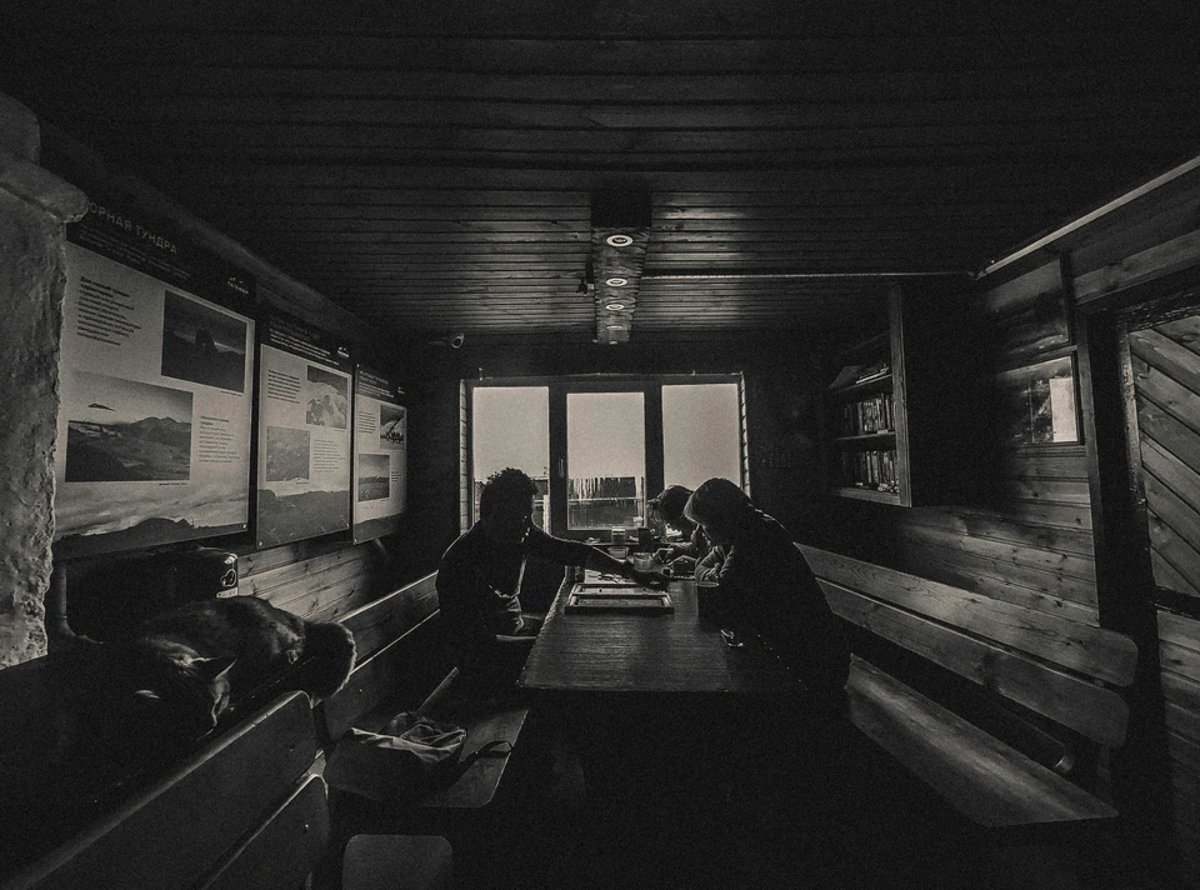
Every company move in a production schedule can cost an hour or more of shooting time once trucks are reloaded, the new set is lit, and the crew resets. When a script calls for thirty-five disparate locations across a hundred pages, an independent budget bleeds out in truck rentals, parking permits, and crew turnaround before a single frame of dramatic conflict is captured. This guide covers how to radically compress your story's physical footprint while expanding its dramatic scale. For the complete overview of production realities, contracts, and delivery expectations, see our Full guide: Screenwriter's Business Guide: Options, Credits, and Handoffs.
Too many screenwriters treat a limited-location script as an aesthetic compromise or an exercise in filmed theater. When writers merely trap four characters around a dining room table to exchange exposition, the script feels cheap because the setting remains passive background rather than an active engine of conflict. Masters of cinematic economy treat restriction as an architectural weapon. Alfred Hitchcock, Sidney Lumet, and Quentin Tarantino built defining masterworks around confined spaces not by ignoring production constraints, but by converting physical boundaries into structural pressure.
Quick Answer
A limited-location script feels cheap when the space is passive. It feels expensive when the space is a pressure system: characters have a concrete reason they cannot leave, the room is split into zones with different rules, props shift power between people, and conditions inside the space change as the story escalates. Build those four layers and an audience stops counting rooms.
---
The Geography of Entrapment: Architectural Pressure Systems
A small setting feels cheap when the characters have no mechanical reason to stay inside it. The moment an audience asks why the protagonist does not simply walk out the front door, the tension snaps. Before you write a single scene, answer the containment question in physical terms.
There are two kinds of containment, and the strongest contained scripts use both.
External containment is the force outside the walls. It can be a hostile environment (a storm, a contaminated surface, a sealed ocean), an institution (a jury that cannot leave until it reaches a verdict), or a physical limitation (a broken leg, a locked vault, an injury that makes moving fatal). External containment answers "why can't they leave?"
Internal friction is the force inside the walls. Characters want incompatible things, share a resource that is running out, or are hiding something from each other. Internal friction answers "why does staying hurt?"
When only external containment exists, you get characters waiting. When only internal friction exists, you get an argument someone could end by going home. Put both in the same room and the location becomes the antagonist's best ally. If you want to design that force with more precision, our guide to antagonist design and pressure systems breaks down how person, institution, nature, and self can all press on a character at once.
The Three-Zone Map
Every strong single location divides into zones that carry different social rules. Map them before drafting.
| Zone | Function | Typical Spaces | What Happens Here |
|---|---|---|---|
| Alpha: Public / Staged | Where characters perform for each other | Living room, jury table, warehouse floor | Masks stay on, alliances are tested in front of witnesses |
| Beta: Private / Hidden | Where masks drop | Bathroom, back office, attic, panic room | Confessions, secret calls, physical triage, plotting |
| Gamma: Threshold / Breach | Where the outside world presses in | Front door, hatch, window, airlock, phone | Escape attempts, intruders, news from outside |
Micro-geography sits on top of the zones: sightlines (who can see whom), physical advantage (who is closer to the weapon, the door, the phone), and exits (which ones are real, which are blocked). Write these down on a single floor plan and keep it pinned next to your draft.
---
Six Masters of Contained Cinema
Each of these films solves the containment problem differently. Study the mechanism, not the surface.
Rear Window (1954): The Body as the Wall
Alfred Hitchcock and screenwriter John Michael Hayes trap L.B. Jefferies in his apartment with a leg in a full cast. The external containment is his own body. Paramount built the courtyard and the surrounding apartments as one enormous set, and the film almost never leaves Jefferies' point of view. The genius is that the location expands outward through the window: every neighboring apartment becomes a small story, and the courtyard becomes a screen he cannot stop watching.
The threshold zone carries the climax. When Thorwald finally crosses into Jefferies' apartment, the safe distance that defined the whole film collapses, and Jefferies can only defend himself with what is within arm's reach (camera flashbulbs). The lesson: a character's physical limitation can do more containment work than any locked door.
Panic Room (2002): Vertical Zones
David Koepp's script for David Fincher stacks its zones vertically inside a four-story Manhattan brownstone. Meg and her daughter Sarah retreat into the fortified panic room (Beta) while three burglars occupy the rest of the house (Alpha). The twist is that what the burglars want is inside the panic room itself, so the safe zone is also the target.
Koepp keeps reversing the value of each zone. The panic room protects Meg, but its phone line is not connected, and Sarah is diabetic and her insulin is outside it. Every trip out of Beta becomes a set piece with a clear objective. When you plan sequences like this, the cause and effect logic in Writing Setpieces: Cause/Effect Logic, Geography, and Payoff keeps the geography readable.
Reservoir Dogs (1992): The Aftermath Location
Quentin Tarantino never shows the robbery. Most of the film plays out in a single warehouse where the surviving criminals regroup after the job goes wrong. The external containment is the police manhunt outside. The internal friction is the growing certainty that one of them is an informant, and a wounded Mr. Orange bleeding on the floor keeps a ticking clock in the middle of the frame.
Tarantino expands the world through flashbacks rather than by moving the present-day action, which keeps the main location tight while the story grows. The same technique works on the page through sub-locations inside one building. A compressed example (illustrative, not from the screenplay):
``` INT. WAREHOUSE - DAY
The loading floor. A ramp, a stack of pallets, a tarp over something no one wants to look at.
AT THE RAMP
Two men argue in whispers, eyes on the office door.
INSIDE THE OFFICE
A third man dials a phone. Hangs up before it connects. ```
Mini-slugs like these let the reader feel movement without a new location for the schedule. Our guide to scene headings, continuous action, and mini-slugs covers the formatting rules in detail.
12 Angry Men (1957): Changing the Room Without Moving
Reginald Rose's script and Sidney Lumet's direction confine twelve jurors to one deliberation room on a hot summer day. The containment is institutional: they cannot leave until they reach a verdict. The friction is moral: one juror holds out against eleven.
Lumet described his camera plan in his book Making Movies. As the film progressed, he gradually moved to longer lenses and lowered the camera from above eye level to below it, so the ceiling started to appear in the frame. The room seems to shrink around the men. The screenplay supports that plan with conditions that change. The fan does not work at first, the heat builds, and a sudden rainstorm breaks the weather. After the storm, the fan finally runs, and the mood in the room shifts with it.
This is the most important principle in contained writing: if you cannot change the location, change the conditions inside it. Temperature, light, sound, time of day, a power cut, a storm. Each change gives the director a new look and gives your characters a new pressure. Write those conditions into action lines without directing the camera, using the approach in Writing Action Lines: Density, Readability, and Shootability.
Carnage (2011): Props as Detonators
Roman Polanski's film, adapted with Yasmina Reza from her play God of Carnage, keeps two couples in one Brooklyn apartment as they try to settle a fight between their sons. Nothing physically stops the visitors from leaving. They try more than once and keep getting pulled back in. The containment is social: neither couple wants to be the one who walks out first.
Polanski and Reza escalate through objects. Alan's cell phone, which keeps interrupting with work calls, ends up dropped into a vase of tulips. The hosts' prized art books get ruined. A bottle of Scotch comes out, and the polite surface of the afternoon comes apart drink by drink. Each object changes who holds power in the room. That shift between what people say and what they mean is the engine described in Subtext Writing: Making Dialogue Mean Two Things at Once.
10 Cloverfield Lane (2016): The Unreliable Wall
Dan Trachtenberg directed from a script by Josh Campbell, Matthew Stuecken, and Damien Chazelle. Michelle wakes in Howard's underground bunker and is told the air outside is poisoned. The external containment might be real or might be a lie, and that doubt is the whole engine.
The script plants clues in the threshold zone. Michelle sees "HELP" scratched into the window of the bunker hatch, then finds an earring belonging to a missing girl. Those details turn the safe shelter into a possible prison without a single new location. When she finally decides to leave, she builds a protective suit out of a shower curtain and other materials from inside the bunker. The location provides the tools for its own escape, which is the best payoff a contained script can deliver.
---
Prop Stakes: Objects That Move Power
In a confined space, props do the work that location changes would do in a larger film. Track three kinds:
1. Advantage objects give one character an edge: a weapon, a key, a phone with a signal, a medical supply someone needs.
Map each object to the zone where it lives. When an object crosses zones, something should change in the power balance. A useful test is to list every prop in your script and ask what changes when it moves. If the answer is nothing, cut it or give it a job. For a structured way to make those changes escalate rather than repeat, see Stakes Engineering: Crafting Escalation Patterns That Drive Narrative Without Feeling Forced.
---
Expanding the World Without New Sets
A contained film still needs a world beyond its walls. Bring it in through these channels instead of new locations:
- Phones and radios: voices from outside that raise stakes or deliver news.
A subplot can run entirely through one of these channels. A character's estranged partner who only exists as phone calls can carry a full B-story, as explained in B-Story Integration: How Subplots Actually Support Theme. Inside the room, keep characters colliding until what they want gives way to what they need, the core of Character Want vs Need: Building Arcs That Survive the Edit.
---
The Location Audit: A Practical Workflow
Run this audit on any draft before sending it to a producer.
1. Count real locations. List every slugline. Group scenes that could happen in one building. Aim for four or fewer master locations on a low budget.
For short films, this audit matters even more, since one strong location is often the entire production. Short Film Structure: Writing Arcs Under 15 Minutes shows how to build a complete arc inside that limit.
---
Frequently Asked Questions
How many locations should a low-budget feature have?
Does a single-location script read as a stage play? Only if it relies on dialogue alone. Physical tasks, zone crossings, prop stakes, and changing conditions keep it cinematic.
Should I write camera directions to show claustrophobia? No. Describe the physical facts (heat, proximity, a low ceiling, a jammed door) and let the director choose lenses. Lumet's lens plan in 12 Angry Men was a directing choice that grew out of a script built on rising pressure.
---
Interface & Handoff Notes
Writing for tight locations requires deliberate coordination across multiple cinematic crafts. Below are the operational inputs, structural deliverables, and recurring failure modes for managing spatial containment.
Upstream Inputs (What You Receive)
Downstream Outputs (What You Deliver)
Top 3 Failure Modes
2. Geographic Incoherence: The script fails to establish clear, consistent physical rules for the space (such as where doors lead, who can see whom, and how far apart characters are), disorienting the production designer, cinematographer, and audience.
3. Pacing Exhaustion: The script maintains a relentless, loud intensity without changing room conditions, atmosphere, or character alliances, numbing the audience through sheer lack of dynamic variety.
---
Browse This Cluster
- Screenwriter's Business Guide: Options, Credits, and Handoffs
---
Next Steps
Ready to see how this fits into the bigger picture? Start with the complete guide.
📚 Complete Guide: Screenwriter's Business Guide: Options, Credits, and Handoffs
Master the structural beats within your compressed sets using our step-by-step framework in Scene Design: Objective, Obstacle, Turn (A Repeatable Template), and keep your pages lean and shootable with Writing Action Lines: Density, Readability, and Shootability.
---
© 2026 BlockReel. All rights reserved. Licensed under CC BY-NC-ND 4.0 • No AI Training. Originally published on BlockReel.
Frequently Asked Questions
How many locations should a micro-budget indie film have?
Producers generally prefer four or fewer master locations for micro-budget features. You can expand the scope by using multiple sub-locations inside those main buildings.
Why do some single-location movies feel like cheap stage plays?
They feel cheap when the space is a passive background and characters simply sit around exchanging exposition. To avoid this, make the location an active engine of conflict using physical tasks and changing conditions.
What are the best ways to keep a single location visually interesting?
If you cannot change the location, change the conditions inside it. Altering the temperature, lighting, sound, or time of day gives the director new looks and gives the characters new obstacles.
How do you expand the world of a movie without adding new sets?
You can bring the outside world in through phones, radios, windows, or screens. Introducing a new character through an arrival also resets room alliances without requiring a location change.
When should a screenwriter write specific camera directions to show claustrophobia?
You should not write explicit camera directions to show claustrophobia. Instead, describe physical facts like heat, proximity, or low ceilings in the action lines, allowing the director to choose the right lenses to convey the pressure.
What is the difference between external containment and internal friction?
External containment is the outside force, like a storm or an institution, that explains why characters cannot leave. Internal friction is the force inside the walls, such as incompatible goals or dwindling resources, that explains why staying is painful.